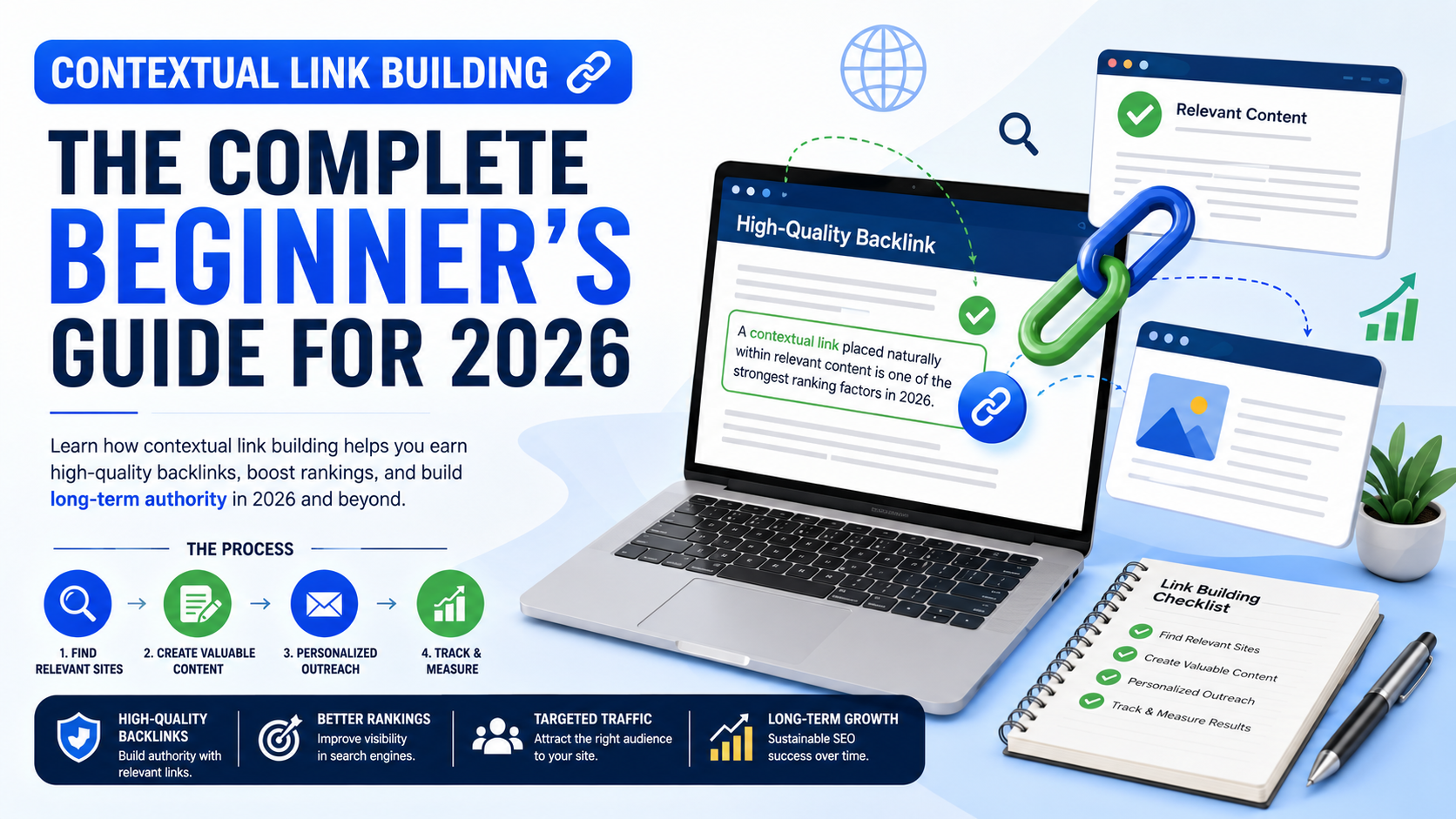
Contextual link building is the single most reliable way for a growing website to earn trust with search engines without spending a fortune on advertising. If you have ever wondered why some sites seem to rank effortlessly while others with similar content stay buried on page five, the answer very often comes down to the quality and placement of their backlinks. This guide walks through everything a beginner needs to know before starting a campaign, from the basic definition to the exact steps that separate a successful outreach effort from a wasted one. By the end of this guide, the value of contextual link building as a long-term growth strategy should be much clearer, along with a realistic roadmap for getting started this year.
What Is Contextual Link Building, Exactly?
At its core, this practice means earning a hyperlink that sits naturally inside a paragraph of relevant written content, rather than being dropped into a sidebar, footer, or generic resource page. When a food blogger writes a full paragraph about a local bakery and links to that bakery’s website in the middle of a sentence describing their pastries, that is a textbook example of the technique in action. Search engines read the surrounding words, understand the topic of the page, and treat the link as a genuine editorial endorsement rather than a paid placement or automated listing.
This distinction matters enormously. A link tucked inside a directory listing next to five hundred unrelated businesses carries almost no weight, while a single link surrounded by genuinely relevant commentary can move rankings in a meaningful way.
Why This Approach Outperforms Older Link Building Tactics
Older link building strategies relied heavily on volume: submit to as many directories as possible, comment on as many blogs as possible, and hope that sheer quantity would eventually produce results. Search engines have become far better at detecting this kind of low-effort activity, and websites that rely on it now often see stagnant or declining rankings.
The modern alternative asks for quality over quantity. A handful of placements earned through genuine relevance and real editorial judgment will consistently outperform hundreds of low-value mentions. This is precisely why so many marketers have shifted their entire strategy toward earning links embedded within real, useful content.
Step-by-Step Process for Beginners
- Step 1: Identify Genuinely Relevant SitesBefore reaching out to anyone, make a list of websites that already cover topics related to your business or niche. A generic blog with no connection to your industry is unlikely to produce a valuable placement, no matter how large its audience might be.
- Step 2: Create Content Worth ReferencingNo publisher wants to link to a thin, generic page. Build something genuinely useful: an original guide, a data-backed article, or a resource that solves a real problem for readers. This step is often skipped by beginners, and it is usually the reason their outreach efforts fail.
- Step 3: Reach Out With a Specific, Personalized PitchGeneric templates rarely work. Mention something specific about the publisher’s recent articles, explain exactly why your resource would benefit their audience, and keep the message short and respectful of their time.
- Step 4: Track Every PlacementKeep a simple spreadsheet of every site you contact, the response you received, and the final placement URL. This record becomes invaluable as your outreach efforts scale.
The table below summarizes the process at a glance:
| Step | Goal | Common Mistake |
| Identify relevant sites | Find genuine topical overlap | Targeting sites with no connection to your niche |
| Create valuable content | Give publishers a real reason to link | Publishing thin or duplicate content |
| Personalized outreach | Increase response rates | Sending mass, generic templates |
| Track placements | Measure long-term progress | Losing track of contacted sites |
Common Beginner Mistakes to Avoid
One of the most frequent errors beginners make is confusing directory submissions with genuine placements. Submitting your business to a hundred low-quality directories is not the same thing as earning a link inside a well-written article, and search engines can tell the difference easily.
Another mistake is ignoring the actual traffic and editorial standards of a target site. A placement on an inactive blog with no real readership provides very little value, regardless of how naturally the link fits within the surrounding paragraph.
Beginners also frequently give up too early. A successful outreach campaign often requires several follow-ups and a fair amount of patience before it produces its first placement.
Tools That Can Support a Contextual Link Building Campaign
While no software can replace genuine relationship-building, a few tools can make a contextual link building effort far more organized. A spreadsheet or lightweight project management board helps track outreach status, while backlink analysis tools can reveal which sites already link to competitors, giving beginners a strong starting list of realistic targets. Keyword research tools can also help identify the specific topics that a target publication covers most often, which makes it easier to pitch a contextual link building idea that actually fits their editorial calendar.
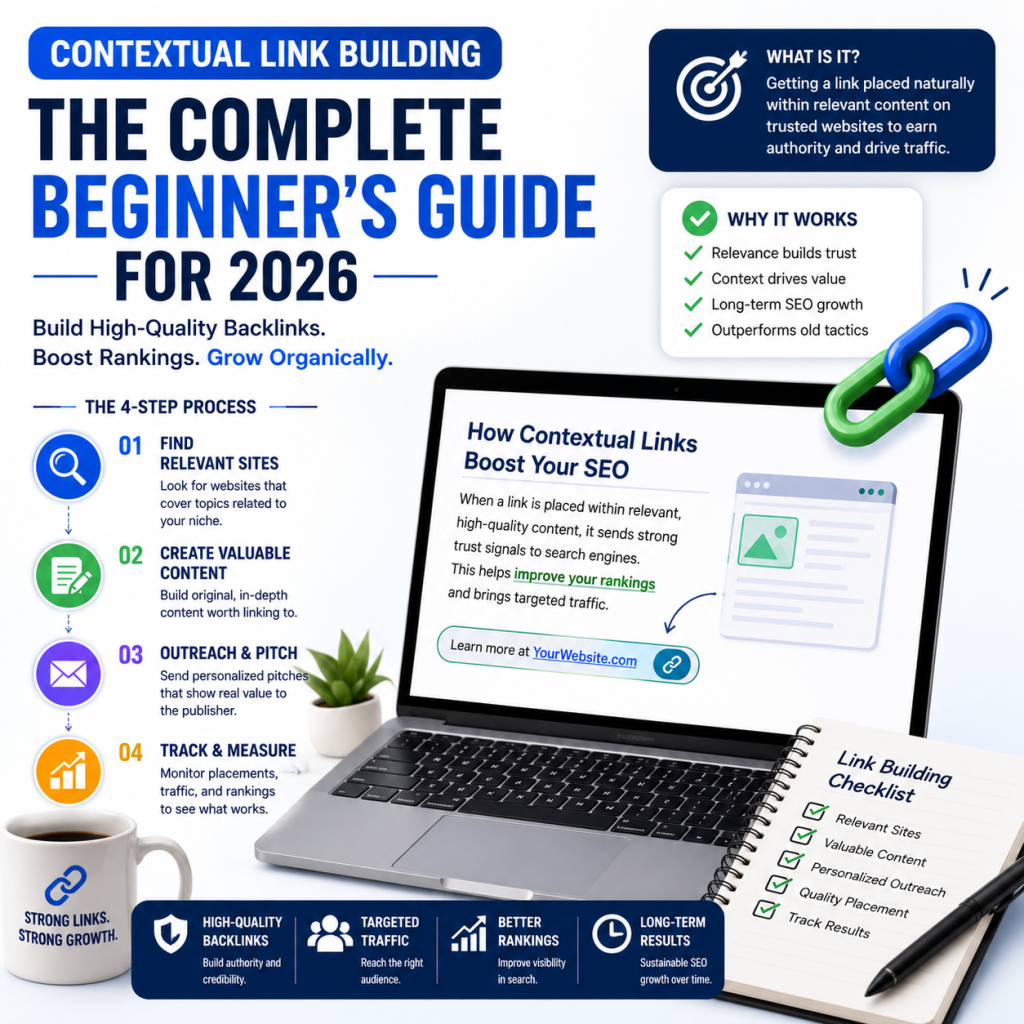
It is worth remembering that tools only support the process; they do not replace the human judgment required to identify genuinely relevant opportunities. A large list of prospects generated by software still needs to be manually reviewed for real topical fit before any outreach begins.
Industry Examples Worth Learning From
Consider a small furniture workshop that wants to grow its organic visibility. Rather than submitting to generic directories, the owner could pursue contextual link building by contributing a detailed guide on caring for handmade wood furniture to an interior design blog. The link sits naturally within a sentence describing the workshop’s craftsmanship, and because the surrounding content is genuinely useful, the placement carries real weight with search engines.
A software company might apply the same principle differently, pursuing contextual link building through a technical breakdown of a common industry problem, published as a guest contribution on a respected trade publication. In both cases, the underlying logic is identical: the link must sit inside content that a real reader would want to engage with.
How to Measure Success
Tracking rankings alone does not tell the whole story. It is worth monitoring referral traffic from each placement, the authority of the linking domain, and whether the relationship with that publisher leads to additional opportunities down the road. A single successful placement that leads to a long-term relationship with a publisher is often worth more than several one-off mentions from unrelated sites.
Building a Sustainable, Long-Term Strategy
Rather than treating this as a one-time project, the strongest results come from ongoing, consistent effort. Publishers notice when a business shows up repeatedly with genuinely useful ideas, and this reputation compounds over time. A modest, steady monthly effort tends to outperform a single intense campaign followed by months of inactivity.
It also helps to maintain a simple content calendar tied to seasonal events, industry news, or community happenings, since publishers are often more receptive when you can offer a timely angle rather than a generic pitch sent at a random moment.
The Role of Relationships in Long-Term Success
Many beginners treat contextual link building as a single transaction: send a pitch, get a placement, move on to the next target. The businesses that see the strongest long-term results usually take a different view. They treat every successful placement as the beginning of a relationship rather than the end of a task.
A publisher who links to your business once is far more likely to do so again if you continue offering genuinely useful ideas and respect their time. Sending a quick thank-you note, sharing their article with your own audience, or offering feedback on future pieces can all strengthen a relationship that leads to repeated opportunities. Over a year or two, a handful of these ongoing relationships can produce far more value than dozens of cold, one-off placements.
Avoiding Shortcuts That Can Backfire
It can be tempting to pay for placements or use automated outreach tools that blast the same message to hundreds of sites at once. Both approaches undermine the core purpose of contextual link building, which is to earn a genuine editorial endorsement rather than manufacture the appearance of one. Search engines have grown increasingly skilled at identifying patterns associated with paid or manipulative link schemes, and websites caught relying on these shortcuts can face real ranking penalties.
The safer and more durable path is slower but far more reliable: build genuinely useful content, identify real topical matches, and reach out like a person rather than a bot. This is the approach that continues to hold up as search engines evolve.
Frequently Asked Questions
Is this strategy suitable for a brand-new website with no existing backlinks?
Yes. In fact, a brand-new site often benefits the most from a handful of genuinely relevant placements, since each new link represents a larger proportional increase in overall authority compared to an established site with thousands of existing links.
How long does it take to see results?
Most beginners start noticing modest ranking improvements within a few months, though the timeline varies depending on competition level and the authority of the sites providing the placements.
Do I need a large budget to get started?
Not necessarily. Many successful campaigns rely more on time, research, and genuine relationship-building than on a large advertising budget.
Should I hire an agency or handle this myself?
Beginners with limited time often benefit from outside help, while those willing to invest the hours themselves can absolutely run a successful campaign without external assistance.
What is the biggest indicator of a high-quality opportunity?
Genuine topical relevance combined with real editorial standards and an active readership are the strongest signals that a potential placement will be worthwhile.
Can a small niche website compete with larger, better-funded competitors?
Yes. Because larger competitors often already have thousands of backlinks, each additional one moves the needle only slightly for them. A smaller niche site starting from a much smaller base can see a proportionally larger benefit from the same handful of well-placed, relevant links.
Conclusion
For anyone just starting out, contextual link building offers one of the clearest paths toward stronger search visibility without requiring a massive budget. By focusing on genuine relevance, creating content worth referencing, and maintaining patient, personalized outreach, even a brand-new website can begin building the kind of authority that search engines reward. Consistency, not intensity, is what ultimately separates a lasting strategy from a short-lived experiment, and beginners who commit to a steady, honest approach tend to see the most durable results over time.
It is worth remembering that contextual link building is not a quick fix, and anyone expecting overnight results is likely to be disappointed. The businesses that benefit most are the ones willing to treat it as an ongoing part of their marketing routine rather than a box to check once and forget. Start small, focus on a handful of genuinely relevant sites, and let the compounding effect of consistent, honest outreach do the rest. Over time, the patient application of contextual link building tends to reward beginners far more reliably than any shortcut ever could.
To discover more insights and explore our full range of resources, we invite you to visit our official website: readjujutsukaisenmangaa.com